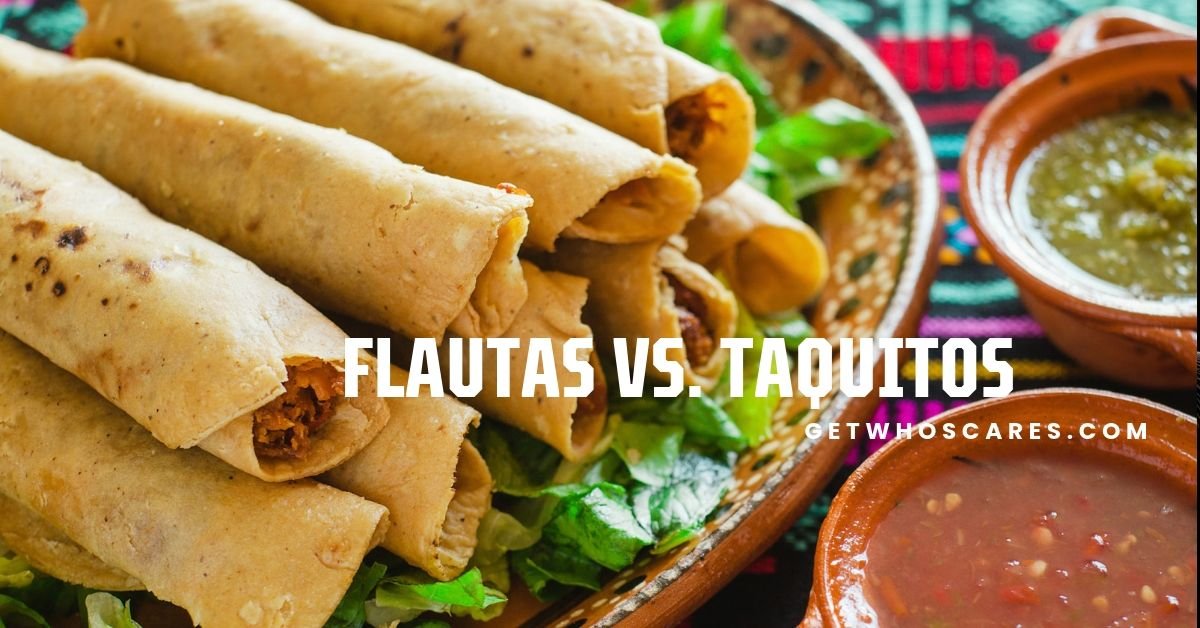
Flautas vs. Taquitos: What’s the Difference Between These Mexican Foods?
Mexican food offers many delicious ways to enjoy tortillas, and rolled, crispy tortillas are among the most popular. Two favorites are flautas and taquitos. They may look almost identical on a restaurant menu, but there are a few details that can help you tell them apart.
If you have ever wondered what a flauta is, what a taquito contains, or whether these dishes are actually the same, the answer depends partly on where the food is prepared. In many American restaurants, taquitos are smaller and commonly made with corn tortillas, while flautas tend to be longer and may use flour tortillas. However, these are common patterns rather than strict rules.
Both dishes can contain chicken, beef, cheese, beans, or potatoes. They are usually rolled around their fillings and cooked until the outside becomes crisp. They may be served with salsa, guacamole, Mexican crema, lettuce, or cheese.
Understanding the differences between flautas and taquitos can help you choose a dish at a Mexican restaurant, shop for frozen snacks, or prepare either one at home. This guide explains their meanings, ingredients, regional variations, cooking methods, nutrition, and related dishes so you can understand what makes each one special.
What Is the Difference Between Flautas and Taquitos?
The main difference between flautas and taquitos is usually their size, shape, and the type of tortilla used. Their fillings and cooking methods often overlap.
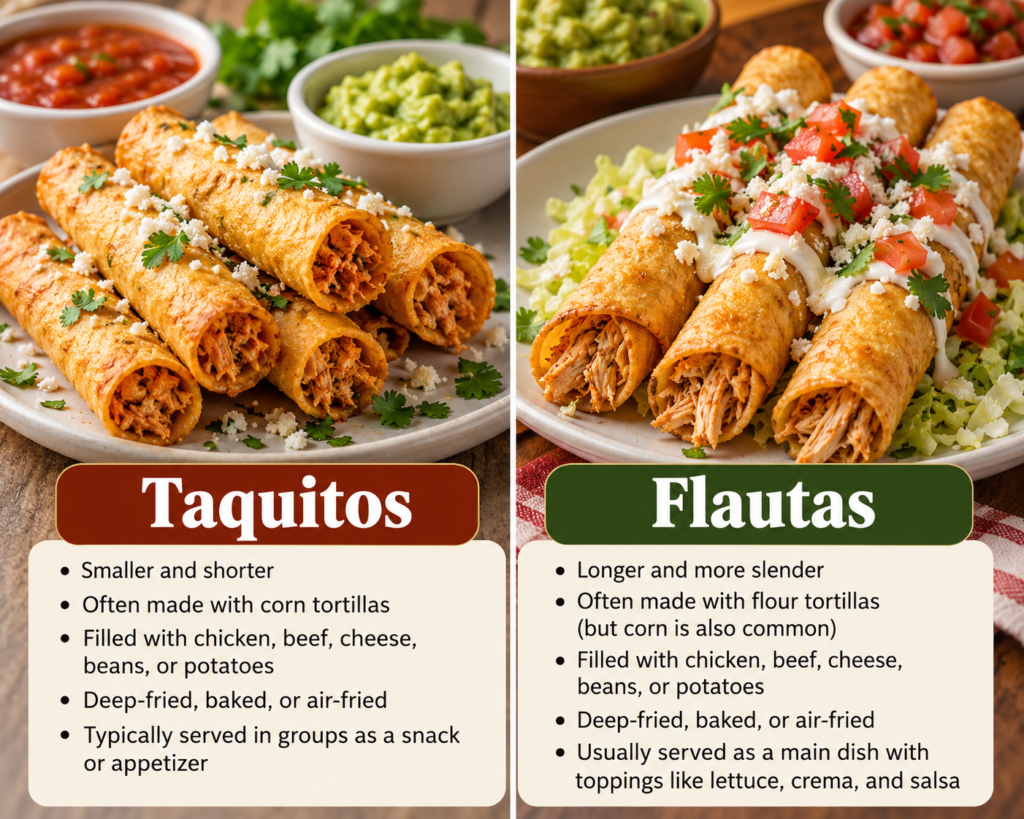
A taquito is generally a small, tightly rolled tortilla filled with savory ingredients and cooked until crisp. A flauta is usually a longer, slender rolled tortilla with a similar filling.
Here is a quick comparison.
| Feature | Taquitos | Flautas |
| Basic meaning | Small rolled tacos | Flute-shaped rolled tortillas |
| Typical size | Short and compact | Longer and more slender |
| Tortilla | Often corn in the United States | Often flour in some U.S. restaurants; corn is also common |
| Common fillings | Chicken, beef, cheese, beans, or potatoes | Chicken, beef, cheese, beans, or potatoes |
| Cooking method | Deep-fried, baked, or air-fried | Deep-fried, baked, or air-fried |
| Typical serving | Several small pieces | Often one or more longer pieces |
| Texture | Crisp shell with a compact center | Crisp exterior with a longer filling |
| Common accompaniments | Salsa, guacamole, sour cream, or crema | Lettuce, crema, salsa, cheese, or guacamole |
These differences are helpful when comparing dishes in the United States. In Mexico, the names can overlap, and a restaurant may use either word for a similar preparation.
The most reliable way to identify a dish is to consider its appearance, tortilla, and local culinary tradition together rather than relying on its name alone.
What Is a Taquito?
A taquito is a small rolled tortilla filled with seasoned ingredients and cooked until the outside is crisp. The name comes from Spanish: taco refers to the familiar tortilla-based food, while the ending in taquito conveys a smaller form.
Taquitos are also known as rolled tacos in many parts of the United States. They are especially popular as appetizers, party snacks, quick lunches, and frozen convenience foods.
What Goes Inside a Taquito?
Taquito fillings vary according to the cook, restaurant, and region. Popular choices include:
- Shredded chicken seasoned with garlic, cumin, and other spices.
- Shredded beef cooked until tender.
- Ground beef mixed with seasonings.
- Cheese that melts during cooking.
- Refried beans for a meat-free option.
- Seasoned potatoes for a soft, hearty center.
Some recipes combine ingredients, such as chicken and cheese or beans and vegetables. The filling is usually spread in a narrow strip so the tortilla can be rolled securely without becoming too bulky.
What Do Taquitos Look Like?
Taquitos are typically short, narrow cylinders. Their compact size makes them easy to pick up and dip into sauces.
When fried properly, the tortilla develops a golden, crunchy exterior. The inside remains warm and tender, creating a contrast between the crisp shell and the filling.
Commercial taquitos may have a more uniform shape because they are made in standardized sizes. Homemade versions can vary depending on the tortilla and how much filling is used.
Also Read: Mexico vs Paraguay: 2025 Match Results, 2026 Updates, Tickets, Lineups, and Where to Watch
Are Taquitos Always Fried?
Traditional crispy taquitos are commonly fried in oil, but frying is not the only option.
Oven-baked taquitos can provide a crunchy result with less added oil. Air-fried taquitos can also develop a crisp exterior when lightly coated with oil and cooked with enough space around each piece.
The final texture depends on the tortilla, filling moisture, cooking temperature, and preparation method. A taquito can still be recognizable as a taquito even when it is baked rather than deep-fried.
What Is a Flauta?
A flauta is a rolled tortilla filled with savory ingredients and shaped into a long, narrow tube. The Spanish word flauta means flute, which describes the dish’s slender appearance.
Flautas are a familiar part of Mexican food and Mexican American restaurant cooking. They are often served as a main dish or substantial snack, depending on their size and the number of pieces on the plate.
What Is a Flauta Made Of?
A flauta usually contains a tortilla wrapped around a prepared filling. The filling may be made from:
- Shredded chicken.
- Slow-cooked or shredded beef.
- Seasoned potatoes.
- Beans and cheese.
- Other cooked vegetables.
- A combination of meat, cheese, and seasonings.
Chicken flautas are particularly familiar on American Mexican restaurant menus. The chicken is generally cooked before being rolled into the tortilla, so the main purpose of frying is to crisp the outside and heat the assembled dish.
Are Flautas Made With Corn or Flour Tortillas?
Both types of tortillas can be used.
In many U.S. restaurants, flautas are made with flour tortillas. Flour tortillas are often available in larger sizes, making them suitable for producing long, slender rolls.
Corn tortillas are also used for flautas, particularly in Mexican preparations. They contribute a distinct corn flavor and can create a crisp texture when handled and cooked correctly.
The choice depends on regional customs, the recipe, and the cook’s preference. A flauta made with a corn tortilla is not automatically incorrect, and flour tortillas do not exclusively define the dish.
How Are Flautas Usually Served?
Flautas are often presented on a plate with toppings or sauces. Common additions include shredded lettuce, Mexican crema, salsa, crumbled cheese, sliced avocado, and chopped tomato.
These toppings add freshness and contrast to the fried tortilla. However, toppings are not a defining requirement. A simple flauta with a dipping sauce can be just as enjoyable.
Why Do Flautas and Taquitos Have Different Names?
The names describe different aspects of the food. Taquito refers to a small taco, while flauta refers to the long, flute-like shape.
The distinction becomes less clear when people use the words according to local habits. One restaurant may call a short corn tortilla roll a taquito, while another may use the word flauta for a similar item.
Mexican cooking also includes many regional variations. Tortilla size, ingredients, and preparation methods differ between households and communities. As a result, the same general type of rolled tortilla may have different names in different places.
This variation is important when reading recipes, ordering at restaurants, or comparing packaged foods. Rather than assuming that one definition applies everywhere, look at the actual preparation.
Flautas vs. Taquitos vs. Rolled Tacos
The phrase rolled taco is useful because it describes the shape and preparation rather than a single fixed recipe.
In many American restaurants, rolled tacos are essentially taquitos: tortillas filled with meat or another ingredient, rolled into cylinders, and fried until crisp.
Flautas are also rolled tortillas, so the three terms can refer to closely related foods.
What Are Rolled Tacos?
Rolled tacos are tortillas wrapped around a filling and cooked until crisp. They are frequently served with salsa, guacamole, cheese, or sour cream.
The term is particularly common in the United States, including restaurants that serve Mexican American food. Depending on the establishment, rolled tacos may be smaller than flautas or may be nearly identical to them.
Are Tacos Dorados the Same as Flautas and Taquitos?
Tacos dorados means golden tacos. The name refers to tortillas that are cooked until crisp, and the term can describe more than one preparation.
Some tacos dorados are made by folding a tortilla over its filling before frying. Others are rolled. When the tortillas are rolled, the resulting dish may resemble a taquito or flauta.
This is why searching for flautas vs. taquitos vs. rolled tacos does not always produce a single universal answer. The words describe related dishes, and their precise meanings depend on the region and restaurant.
How Do They Differ From Enchiladas?
Enchiladas are generally made by filling tortillas, rolling or folding them, and serving them with a sauce. They are commonly soft and may be baked or heated with sauce and cheese.
Flautas and taquitos, by contrast, are often prepared to preserve a crisp exterior. They are usually served with sauces and toppings added at the table rather than being completely covered in sauce before serving.
The filling may overlap, but the cooking method and finished texture are different.
Chicken Flautas vs. Taquitos: Which Is Better?
Chicken flautas and chicken taquitos are two popular choices for people who enjoy crispy tortillas filled with seasoned chicken. Since both can contain the same ingredients, the difference usually comes down to the tortilla, the size of the roll, and the way the dish is presented.
Chicken Flautas
Chicken flautas are generally longer rolls filled with shredded chicken. The chicken is often seasoned with garlic, onion, cumin, chili powder, and salt.
The filling is wrapped in a tortilla and cooked until the exterior becomes crisp. Flour tortillas are common in some American restaurant versions, although corn tortillas are also used.
Chicken flautas are often served with lettuce, crema, salsa, and cheese. Their larger size makes them suitable for a lunch or dinner plate.
Also Read: Are You a Dinosaur Pick Up Line? 200+ Funny Dino Jokes, Puns, and Rizz Lines
Chicken Taquitos
Chicken taquitos are usually smaller and more compact. They are often prepared with corn tortillas and served in groups.
The filling may contain shredded chicken, cheese, and seasonings. Because the rolls are small, they are convenient for dipping into salsa, guacamole, or another sauce.
Taquitos are popular for parties, quick meals, and snacks because several pieces can be served together.
Which Chicken Dish Should You Choose?
Choose chicken flautas if you prefer longer rolls and a more substantial individual portion. Choose chicken taquitos if you want smaller pieces that are easy to share.
Neither dish is automatically healthier or tastier. The amount of filling, tortilla ingredients, cooking method, and toppings can make a bigger difference than the name on the menu.
Corn Tortillas for Flautas and Taquitos
Corn tortillas are a traditional and widely used choice for Mexican rolled-tortilla dishes. They provide a recognizable corn flavor and can become crisp when cooked properly.
However, corn tortillas can crack while rolling, particularly when they are cold or dry. Preparing them correctly is important for both flautas and taquitos.
How to Keep Corn Tortillas From Breaking
<AsyncImageGroup query={[“warm corn tortillas stacked in a clean kitchen towel”,”corn tortillas filled with shredded chicken before rolling”,”crispy golden corn tortilla taquitos on a plate”]} aspectRatio=”5:4″ layout=”bento” numPerQuery={1}/>
Try these practical steps when making rolled tortillas at home:
- Warm the tortillas before filling them. A skillet, microwave, or covered steamer can help make them more flexible.
- Keep unused tortillas covered so they do not dry out while you prepare the filling.
- Avoid adding too much filling. A narrow, even layer makes rolling easier.
- Roll gently but firmly. Excessive pressure can split the tortilla.
- Secure the roll when necessary. A toothpick may help during frying, but remove it before serving.
If a tortilla breaks, do not automatically discard it. You may be able to use it for a folded taco or another dish instead.
Should You Use Flour Tortillas?
Flour tortillas are often easier to roll because they are flexible, especially when fresh. Their flavor is milder than that of corn tortillas, and they can develop a crisp surface when fried or baked.
For a longer restaurant-style flauta, a larger flour tortilla may be convenient. For a corn-forward flavor and a smaller roll, corn tortillas are a good option.
The best choice depends on the style you want to make rather than a strict rule about which tortilla belongs to each dish.
How to Make Crispy Flautas or Taquitos at Home
Making either dish at home is a practical way to use leftover cooked chicken, beef, beans, or vegetables. The basic process is simple: prepare the filling, warm the tortillas, roll them securely, and cook until the outside is crisp.
Ingredients
For approximately 8–10 small rolls, gather:
- 8–10 small corn tortillas or another suitable tortilla.
- 2 cups of cooked, shredded chicken or another filling.
- ½ cup of shredded cheese, if desired.
- ½ teaspoon of ground cumin.
- ½ teaspoon of garlic powder.
- Salt and black pepper to taste.
- A small amount of cooking oil.
- Salsa, guacamole, or crema for serving.
These quantities are starting points. The number of rolls will depend on tortilla size and how much filling you use.
Step 1: Prepare the Filling
Place the cooked chicken in a bowl and mix it with the seasonings. Add cheese if you want a richer filling.
The mixture should be moist enough to taste good but not watery. Excess liquid can make the tortilla soggy and may cause it to split.
If you are using leftover meat, make sure it has been stored safely and reheated appropriately before serving.
Step 2: Warm the Tortillas
Heat the tortillas briefly until they become flexible. Keep them covered while you work.
This step is especially helpful with corn tortillas, which can crack if rolled while cold.
Step 3: Fill and Roll
Place a small amount of filling in a narrow line near one side of each tortilla. Roll it into a compact cylinder.
Do not overfill the tortillas. A roll that is too full may open during cooking or release filling into the oil.
If necessary, secure each roll with a toothpick and remember to remove it before eating.
Step 4: Choose a Cooking Method
You can fry, bake, or air-fry the rolls. Each method produces a slightly different result.
Deep-Frying
Heat cooking oil in a suitable pan, using a thermometer and following safe frying practices. Carefully add the rolls in small batches and cook until golden and crisp, turning them as needed.
Do not overcrowd the pan, as this can lower the oil temperature and lead to greasy food. Transfer the cooked rolls to a wire rack or a paper towel-lined plate.
Never leave hot oil unattended, and keep water away from the pan.
Oven-Baking
Arrange the rolls on a baking sheet with space between them. Brush or lightly spray the outsides with oil.
Bake in a preheated oven at approximately 425°F (220°C), turning them as needed, until crisp and golden. Cooking time varies with tortilla type, filling, and oven performance, so check them regularly.
Baked rolls may have a slightly different texture from deep-fried versions, but they can still be crunchy and flavorful.
Air-Frying
Lightly coat the rolled tortillas with oil and arrange them in a single layer in the air fryer basket.
Cook at approximately 375°F (190°C), turning halfway through, until crisp. The exact timing depends on the appliance and the thickness of the rolls.
Avoid stacking the rolls. Air needs to circulate around them for even browning.
Step 5: Add Toppings and Serve
Serve the rolls soon after cooking for the best crunch. Add salsa, guacamole, crema, shredded lettuce, or cheese according to your preference.
If you want to prepare a platter for guests, place sauces in separate bowls. This lets everyone choose their preferred flavors and helps prevent the tortillas from becoming soggy before serving.
How to Keep Flautas and Taquitos Crispy
A crispy exterior is one of the most appealing parts of these dishes. However, moisture from the filling, trapped steam, and improper storage can soften the tortillas.
Here are several ways to preserve their texture.
Avoid Wet Fillings
Drain excess liquid from cooked meat, beans, or vegetables before rolling. A filling that is too wet can soften the tortilla from the inside.
Do Not Overcrowd the Cooking Surface
Whether you are frying, baking, or air-frying, leave enough space for heat to circulate. Cooking too many rolls at once can produce uneven browning.
Use a Wire Rack After Frying
A wire rack allows steam to escape from underneath the rolls. When food sits directly on a flat plate, trapped steam can soften the bottom.
Add Sauces Just Before Eating
Creamy sauces and salsa are best served alongside the rolls or added immediately before serving. Keeping the crunchy shell separate from wet toppings helps it stay crisp longer.
Reheat Leftovers Properly
An oven or air fryer is generally better for restoring crispness than a microwave. Refrigerate leftovers promptly in a covered container and follow standard food-safety guidance when reheating.
Also Read: Monogamy Meaning: A Complete Guide to Definition, Relationships, Dating, and Non-Monogamy
What Do Flautas and Taquitos Taste Like?
Although both dishes have a crunchy exterior and a savory filling, the flavor depends heavily on the tortilla and ingredients.
Corn tortillas bring a toasted corn flavor that can complement chicken, beef, beans, and vegetables. Flour tortillas have a milder wheat flavor and may develop a slightly different crispness.
The filling usually contributes most of the seasoning. Chicken seasoned with cumin and garlic will taste different from shredded beef with chili, or potatoes mixed with cheese.
Toppings also affect the final flavor:
- Salsa adds acidity, freshness, and heat.
- Guacamole provides a creamy texture and mild avocado flavor.
- Mexican crema adds a cool, tangy finish.
- Crumbled cheese contributes saltiness.
- Lettuce and cabbage add freshness and crunch.
For a balanced plate, combine a crisp roll with a fresh topping and a sauce that complements the filling.
Are Flautas and Taquitos Healthy?
Flautas and taquitos can fit into a balanced diet, but their nutritional value depends on the ingredients, portion size, cooking method, and toppings.
A small corn tortilla roll filled with beans and vegetables may have a different nutritional profile from a large flour tortilla roll filled with beef and cheese. Deep-frying and adding generous amounts of crema or cheese can also increase the overall energy content.
Fried vs. Baked vs. Air-Fried
Deep-frying generally adds more oil to food than baking without added oil. Air-frying can reduce the amount of oil needed while still creating a crisp exterior.
However, the cooking method is only one part of the picture. A large portion of air-fried rolls with a rich cheese filling may still provide more calories than a smaller serving of simpler ingredients.
Which Fillings Are Good Choices?
Different fillings offer different nutritional benefits.
| Filling | What it offers | What to consider |
| Chicken | Protein | Seasoning and added oil affect the final dish |
| Lean beef | Protein and several essential nutrients | Fat content varies by cut |
| Beans | Plant protein and fiber | Refried versions may contain added fat or salt |
| Potatoes | Carbohydrates and some potassium | Cheese, butter, and oil change the nutritional profile |
| Vegetables | Fiber and a variety of vitamins | Nutrients vary with the vegetables used |
| Cheese | Protein and calcium | Can increase saturated fat and sodium |
Are Corn Tortillas Healthier Than Flour Tortillas?
Neither tortilla is automatically the healthier choice in every situation. Their sizes, ingredients, and nutritional values vary by brand and recipe.
Corn tortillas are often made from corn and water, while flour tortillas typically contain wheat flour and may include added fat. Comparing nutrition labels and serving sizes is more useful than judging the tortilla by its name alone.
People who need to avoid gluten should check ingredients carefully. Pure corn tortillas are often gluten-free, but packaged products and restaurant preparations can contain other ingredients or be exposed to cross-contact.
Those managing sodium intake, food allergies, or other dietary needs should also check the filling, seasonings, toppings, and cooking conditions.
Buying Frozen Taquitos: What Should You Know?
Frozen taquitos are a convenient option for busy households. They are commonly sold in grocery stores and may contain chicken, beef, cheese, beans, or other fillings.
Products from brands such as El Monterey and José Olé are examples of commercially available frozen taquitos. Product availability, recipes, and package sizes can vary by retailer and location.
What About Costco Taquitos?
People searching for Costco taquitos are often looking for convenient frozen snacks or easy meal options.
Costco’s inventory can vary by warehouse, region, and season. A product available at one location may not be stocked at another, so check your local warehouse or Costco’s current online listings rather than assuming a particular brand is always available.
Before buying a large package, consider these factors:
- Filling: Check whether the product contains chicken, beef, cheese, beans, or a combination.
- Tortilla: Look at whether it uses corn or flour and check the ingredient list.
- Nutrition: Compare the serving size, sodium, protein, and saturated fat.
- Allergens: Review the package for milk, wheat, soy, and other relevant allergens.
- Cooking instructions: Follow the manufacturer’s directions for the appliance you plan to use.
Are Frozen Taquitos the Same as Restaurant Taquitos?
They share the same basic idea, but the final texture can differ.
Frozen taquitos are designed for convenient storage and reheating. Restaurant taquitos may be prepared from freshly assembled tortillas and served immediately, sometimes with freshly made toppings.
Neither is necessarily better for every occasion. Frozen versions are practical for quick snacks, while restaurant versions may offer more choices in fillings, sauces, and presentation.
How Do You Make Frozen Taquitos Crispy?
For the best result, follow the instructions on the package. Oven baking and air-frying are common options, but temperatures and cooking times vary by product.
Arrange the taquitos in a single layer, avoid overcrowding, and turn them if the instructions recommend doing so. Make sure the filling reaches the safe internal temperature specified by the manufacturer.
Do not rely on the outside color alone to determine whether a frozen product is fully heated.
Flautas Pronunciation and Taquito Meaning
Understanding the Spanish names can make it easier to recognize these dishes on menus and in recipes.
How Do You Pronounce Flautas?
Flautas is commonly pronounced “FLOW-tahs” in English. The singular form, flauta, is pronounced approximately “FLOW-tah.”
The Spanish pronunciation has a clear vowel sound at the end. The word refers to flutes, which explains the name’s connection to the food’s long, narrow shape.
How Do You Pronounce Taquitos?
Taquitos is commonly pronounced “tuh-KEE-tohs” in English. The singular form, taquito, is pronounced approximately “tuh-KEE-toh.”
The word is the diminutive form of taco, meaning a small taco. The ending helps explain why taquitos are generally associated with smaller rolled tortillas.
What Is Flauta in English?
Flauta translates to “flute” in English. In a food context, it refers to a rolled tortilla dish whose elongated shape resembles the musical instrument.
What Does Taquitos Mean?
Taquitos means “little tacos” or “small tacos.” In American food usage, the word usually refers to small, rolled tortillas with savory fillings that are cooked until crisp.
The meaning of the word is useful, but it does not mean that every restaurant follows exactly the same size or tortilla rule.
Common Mistakes When Comparing Flautas and Taquitos
Some common assumptions can make the difference between the dishes seem more rigid than it really is.
Also Read: 220+ KFC Pick Up Line That Are Funny, Clever, Cute, and Flirty
Assuming All Flautas Use Flour Tortillas
Flour tortillas are common in some American versions, but corn tortillas are also used for flautas. The name does not guarantee a specific tortilla.
Assuming All Taquitos Are the Same Size
Taquitos are generally small, but commercial products, homemade recipes, and restaurant portions vary. Size alone cannot always establish the dish’s name.
Confusing Toppings With Ingredients
Lettuce, crema, cheese, and salsa are common accompaniments, not requirements that define a flauta. Taquitos can be served with many of the same toppings.
Thinking the Filling Determines the Name
Chicken does not automatically make a roll a flauta, and beef does not automatically make it a taquito. The preparation, shape, tortilla, and local naming habits all matter.
Expecting Every Restaurant to Follow One Definition
Menus reflect local traditions and the choices of individual kitchens. If the distinction matters to you, ask whether the dish uses corn or flour tortillas and how large the pieces are.
Frequently Asked Questions About Flautas and Taquitos
Can you make flautas or taquitos ahead of time?
Yes. You can prepare the filling ahead and refrigerate it until you are ready to assemble the rolls. You can also assemble the tortillas shortly before cooking, provided the ingredients are handled and stored safely. For the best texture, cook them close to serving time.
If you need to prepare them in advance, keep the cooked rolls separate from sauces and toppings. Reheat them in an oven or air fryer to help restore their crisp exterior.
What is the difference between a flauta and a chimichanga?
A flauta is a long, rolled tortilla that is usually crisped by frying or another cooking method. A chimichanga is generally a larger, filled flour tortilla that is folded into a closed parcel and fried.
The shape is the easiest distinction: a flauta is a narrow roll, while a chimichanga resembles a sealed burrito. Both can contain meat, beans, cheese, and other fillings, but their typical forms are different.
Can you make vegetarian or vegan flautas and taquitos?
Yes. Beans, seasoned potatoes, mushrooms, peppers, corn, and other vegetables can be used as fillings. For a vegan version, choose tortillas and seasonings without animal-derived ingredients and skip dairy-based cheese and crema.
You can serve the finished rolls with guacamole, tomato salsa, or another plant-based sauce. Check packaged ingredients when cooking for someone with strict dietary requirements.
Why do my taquitos open while cooking?
Taquitos may open if they are overfilled, rolled too loosely, or made with tortillas that have dried out. Excess moisture in the filling can also cause problems.
Use warm, flexible tortillas, spread the filling in a narrow strip, and roll each tortilla firmly. If needed, secure the roll with a toothpick and remove it before serving. Avoid turning the rolls too aggressively while they are cooking.
Can you eat flautas and taquitos with your hands?
Yes. Small taquitos are commonly eaten by hand, particularly as snacks or party food. Larger flautas can also be picked up, although a fork and knife may be more convenient when they have plenty of toppings.
If the rolls are covered with salsa, crema, or shredded vegetables, eating them with a fork can help keep the filling and toppings together.
Which dish is better for a party?
Taquitos are often convenient for parties because their smaller size makes them easy to arrange on a platter and serve with several dipping sauces. Flautas are also suitable, especially when cut into smaller portions or arranged as part of a larger meal.
For either option, serve sauces separately and prepare enough pieces for guests to sample different fillings.
Why do online discussions disagree about flautas vs. taquitos?
People may use the terms differently because restaurant conventions and regional cooking traditions are not identical. Some cooks emphasize tortilla type, others focus on length, and some use both names for similar rolled tortillas.
Online discussions, including searches for flautas vs. taquitos on Reddit, can reveal these differences in personal usage. However, individual comments do not establish a universal culinary rule. Looking at the recipe and regional context gives a more reliable answer.
Conclusion
Flautas and taquitos are closely related Mexican and Mexican American foods made by rolling tortillas around savory fillings and cooking them until crisp. In many U.S. restaurants, taquitos are smaller and commonly use corn tortillas, while flautas are often longer and may use flour tortillas. Both conventions have exceptions.
Their fillings can include chicken, beef, cheese, beans, potatoes, or vegetables. Both dishes can be fried, baked, or air-fried, and both pair well with salsa, guacamole, crema, and fresh toppings.
If you are ordering at a restaurant, pay attention to the size, tortilla, and presentation rather than relying on the name alone. If you are cooking at home, choose the tortilla and filling you enjoy most, keep the filling reasonably dry, and cook the rolls until the exterior is crisp.
Ultimately, the best choice between flautas and taquitos depends on your preferred portion size, texture, ingredients, and how you plan to serve them.